
Solar power generators fort 2026 can keep a fridge, lights, and phones running through a 24–72 hour outage. I’ve watched how fast a normal day turns into a problem when the grid stays down past dinner. First it’s the temperature in the house. Then it’s food safety. After that, it’s everyone’s nerves.
So this guide is built for the outages that actually test you. Not a quick camping weekend, and not a “charge a laptop once” situation. Instead, I’m ranking five high-capacity, solar-capable power stations that make sense for full-day to multi-day disruptions, including the messy real-life parts like surge loads, recharge timing, and how expandable the system is when day two shows up.
Affiliate disclosure
As an Amazon Associate I earn from qualifying purchases.
How I rated these for real outages
I’m not scoring these like a spec sheet contest. I’m scoring them like an outage. That means I care about what stays running, how fast you can get power back into the battery, and how easy it is to scale when the outage lasts longer than you planned for.
Scoring framework
1) Power that holds up under load (30%)
- Continuous output for stacked essentials
- Surge handling for compressors and startup loads
- Useful outlets, not just “a lot of ports”
2) Recharge speed, including solar (25%)
- Solar input ceiling and voltage range flexibility
- AC recharge speed for pre-storm “top off”
- Practical path back to 100% without babysitting it
3) Expandability for day two and day three (20%)
- Battery expansion options and total scalable capacity
- Simple ecosystem, not a confusing accessory maze
- Realistic “add more later” upgrade path
4) Usability when you’re stressed (15%)
- Clear display, app control, and readable inputs
- Quiet indoor-safe operation
- Port layout that makes sense at 2 a.m.
5) Trust signals (10%)
- LiFePO4 chemistry and warranty terms
- Review depth and long-term support reputation
- Transparency in specs and limitations
My baseline outage scenario
- 24–72 hours without grid power
- Keep food safe, air moving, devices charged
- Optional 240V capability for heavier home loads
Quick comparison of the 5 solar generator picks
This table is the high-level snapshot.
| Rank | Model | Battery | AC output | Surge | 120V/240V | Solar input | Expandable to | Weight | Warranty | Best fit |
|---|---|---|---|---|---|---|---|---|---|---|
| #1 |
EcoFlow DELTA Pro 3600Wh
Fast recharge, strong expansion ecosystem
|
3,600Wh | 3,600W (X-Boost up to 4,500W) | 7,200W | 120V (pairing supported) | 1,600W max | Up to 25kWh | 99 lb | 5 years | Balanced home essentials for 24–72 hour outages |
| #2 |
Anker SOLIX F3800
Dual-voltage with high continuous output
|
3,840Wh | 6,000W | Varies by load | 120V / 240V | 2,400W (1,200W x2 MPPT) | Up to 26.9kWh | 132.28 lb | 5 years | Homes that need 240V support and extra headroom |
| #3 |
Jackery HomePower 3600 Plus
Portable, simple, built for quick home backup
|
3,584Wh | 3,600W | Varies by load | 120V (240V in parallel) | See product listing | Up to 21kWh per unit (up to 43kWh multi-unit) | 77.16 lb | See product listing | Families who want a lighter unit and simpler setup |
| #4 |
OUPES Guardian 6000
High output, transfer switch ready, big expansion ceiling
|
4,608Wh | 6,000W | 7,200W boost | 120V / 240V | 2,100W | Up to 41kWh | 111 lb | 5 years | High-load households planning for multi-day outages |
| #5 |
BLUETTI Apex 300 + B500K
Bigger stored energy kit for longer runtimes upfront
|
7,884.8Wh (kit) | 3,840W | 7,680W | 120V / 240V | 2,400W built-in (up to 6,400W expanded) | See product listing | 83.78 lb (main unit listed) | See product listing | People who want more runtime without buying add-ons first |
#1 EcoFlow DELTA Pro 3600Wh
This is the unit I’d trust when an outage stops being “temporary” and starts becoming your new normal for a couple days. It’s not just capacity. It’s the balance of output, recharge options, and the ability to scale if you decide later that one battery isn’t enough for your household.
Why it earned the #1 spot
- Enough stored energy to matter: 3,600Wh can keep essentials stable when you manage loads intentionally.
- Output that handles real overlap: Fridge cycling, fans running, devices charging, lights on.
- Recharge flexibility: When you can refill fast, you stop feeling trapped by the percentage meter.
- Upgradeable path: It’s a strong “core” you can expand instead of replacing later.
What it’s best at powering during a 24–72 hour outage
I like this kind of station for the boring, critical stuff. The kind of stuff that keeps your home feeling livable. Refrigeration comes first, then airflow, then communication and charging.
- Refrigerator and freezer cycling normally
- Fans, lights, Wi-Fi router, phones, laptops
- Medical devices that need stable indoor-safe power
- Short “power windows” for kitchen loads when needed
Common mistake that drains it fast
The fastest way to kill your runtime is constant heat. Space heaters, cooking appliances, and anything that’s basically a heating element will eat stored power fast. So if you’re planning for multiple days, you want to use those loads in short bursts, not as background noise.
My simple 3-day strategy
- Day 1: Stabilize. Keep food cold, keep phones charged, keep the house comfortable.
- Day 2: Add structure. Run bigger loads in timed windows and recharge whenever you can.
- Day 3: Protect the essentials. Prioritize refrigeration and communication first.
If you want one “main” solar generator you can build around, this is the cleanest starting point in the lineup.

EcoFlow DELTA Pro 3600Wh Portable Power Station
Built for real outages. Strong capacity, high output, and an ecosystem that scales when your “one day” outage turns into three.
- 3,600Wh capacity for meaningful runtime
- 3,600W AC output (with surge headroom)
- Solar-capable recharge for multi-day resilience
- Expandable system for longer outage planning
#2 Anker SOLIX F3800
This pick is for the homeowner who doesn’t want “emergency power,” they want something that feels closer to normal. The F3800 stands out because it’s built around higher continuous output and 120V/240V support, which can matter a lot when your backup plan includes more than just the basics.
Why it ranked #2
- High continuous output: 6,000W gives you more breathing room when loads overlap.
- 120V/240V support: Better compatibility for certain home-style needs, depending on what you’re trying to run.
- Solar input that supports daily recovery: Higher solar intake helps you rebuild each day instead of just draining down.
- Expandable ecosystem: It’s a solid “build it bigger later” platform for longer outages.
Where it shines during a multi-day outage
With more output headroom, you can avoid the constant juggling that smaller stations force on you. That doesn’t mean you run everything. However, it does mean your essentials can stay on while you handle short bursts of heavier use without panic.
- Refrigeration plus fans, lights, and device charging with less load anxiety
- Better support for higher-draw appliances in timed windows
- More realistic compatibility if your plan involves 240V loads
- Solar-friendly approach for the “recharge every day” rhythm
The trade-off most people feel immediately
It’s heavy. That matters in real life. If you’re buying this, you want a staging plan before the storm, not after. Once it’s in place, it can feel like a serious home backup tool. Moving it repeatedly is the part that can get old fast.
My practical 72-hour strategy
- Night protection: Keep refrigeration, comfort, and charging stable overnight.
- Daytime recovery: Solar recharge first, then run higher-draw loads in short windows.
- Daily check-in: Watch remaining capacity and adjust habits before you get behind.
If your outage plan includes bigger household loads and you want less compromise, this is the strongest “step up” in the lineup.

Anker SOLIX F3800 Portable Power Station
The “home-load” option in this lineup. Dual-voltage capability and high continuous output help when you want fewer compromises during longer outages.
- 3,840Wh capacity for full-day essentials planning
- 6,000W AC output for stacked loads
- 120V/240V support for more realistic home backup options
- Strong solar input potential for daily recharge cycles
#3 Jackery HomePower 3600 Plus
This is the “keep it simple” choice that still brings real capacity. When people get overwhelmed by all the planning, cords, and add-ons, they tend to stall and buy nothing. So I like having a pick in the list that feels more approachable without dropping into the small, low-power category.
Why it ranked #3
- Solid capacity for the essentials: 3,584Wh is enough to make a real difference when you prioritize.
- Strong output for a 3.6kWh class unit: 3,600W supports stacked essentials without constant tripping.
- More manageable handling: Lighter than some of the “whole home” leaning units.
- Plug-and-play mindset: It’s built for people who want a clean, straightforward backup routine.
What it’s best at during a 24–72 hour outage
If your goal is comfort plus food safety, this unit can do that well. It’s a great match for the “core essentials” list most families actually need, especially when you run power in calm, intentional windows.
- Refrigerator or freezer cycling to protect food
- Fans, lights, router, and charging for the whole family
- Short bursts for small kitchen appliances when needed
- Keeping routines steady, especially overnight
Where people misjudge it
Capacity disappears fastest when you treat the station like a wall outlet you never think about. With any 3.6kWh class unit, you get multi-day performance by staying disciplined with high-draw devices. That means limiting constant heat loads and scheduling bigger appliances in short bursts.
My simple 3-day plan with this unit
- Day 1: Stabilize refrigeration, lighting, and communication first.
- Day 2: Create power windows. Run the fridge on a schedule and keep everything else efficient.
- Day 3: Preserve food and comfort. Recharge whenever the opportunity shows up.
If you want outage-grade capacity without buying the heaviest unit in the lineup, this is the one that tends to fit real households well.
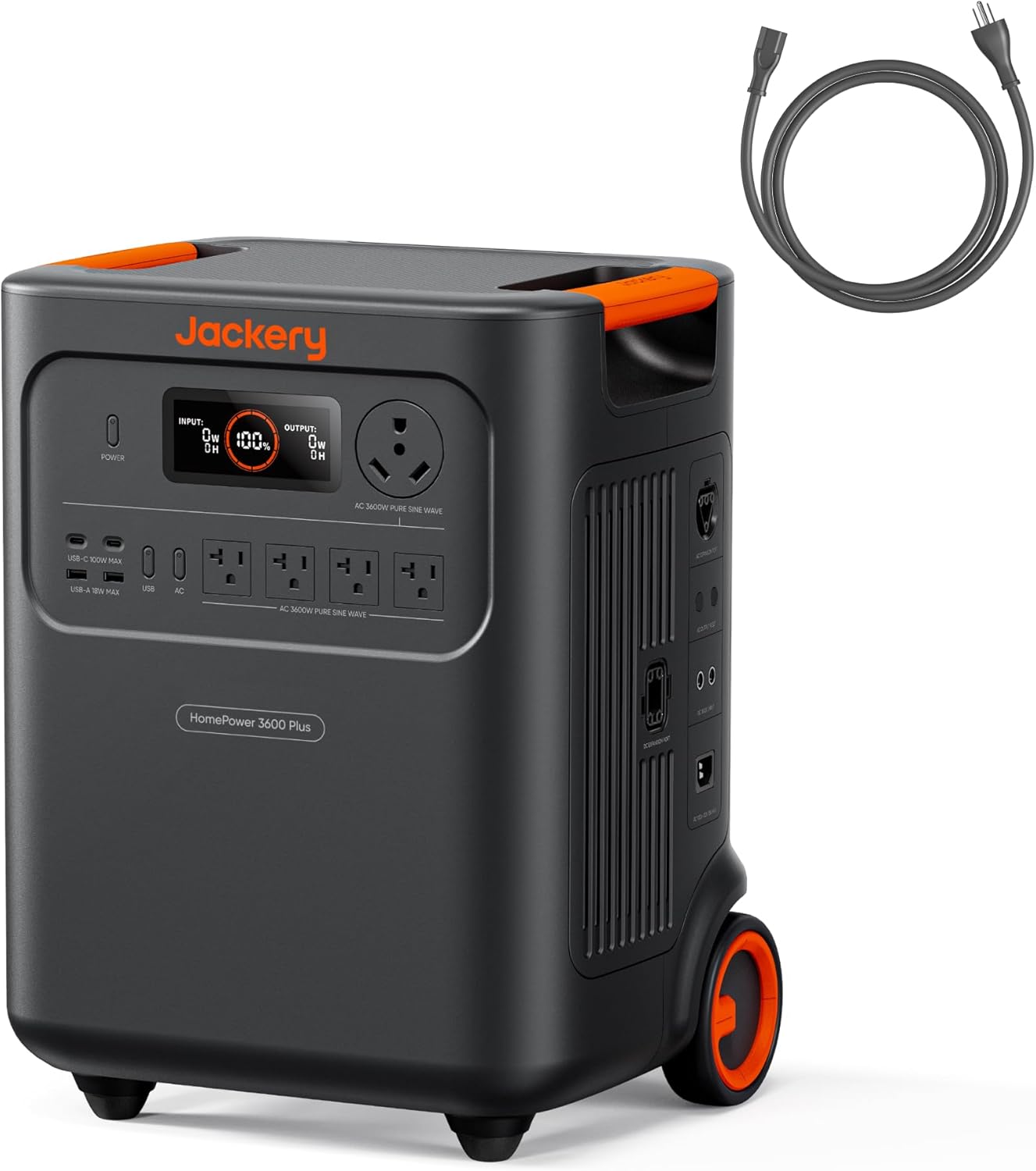
Jackery HomePower 3600 Plus Portable Power Station
A more carryable 3.6kWh class option for families who want simpler, faster setup while still getting real outage-grade capacity.
- 3,584Wh capacity for essential-load planning
- 3,600W output for fridges, fans, lights, and device charging
- Designed around plug-and-play home backup workflows
- Expansion options for longer outages as your plan grows
#4 OUPES Guardian 6000
This pick is about output and home-style compatibility. The Guardian 6000 is the kind of unit you look at when you’ve already felt that sinking moment in an outage where you realize, “We can’t run what we need on a small station.” It’s built for bigger loads, and it’s shaped around the idea that emergency power should connect cleanly to a home plan.
Why it ranked #4
- High output for demanding loads: 6,000W continuous with boost headroom for startup surges.
- 120V/240V dual voltage: Better alignment if your backup plan includes heavier home appliances.
- Strong expansion ceiling: Designed to scale if you want longer runtimes later.
- Home integration mindset: “Transfer switch ready” features fit a more organized outage setup.
Where it shines during longer outages
The advantage here is less juggling. With more output, you can keep your essentials running while still handling short windows of higher demand. That makes the house feel calmer, which matters more than people admit when you’re on day two and everyone’s patience is thin.
- Refrigeration plus comfort loads with room to spare
- More flexibility for larger appliances in timed windows
- Better fit for households that need 240V capability
- Scales into a longer-duration system if you expand it
The downside to plan around
Higher-output units often push you toward “whole-home thinking,” and that’s where people overspend or overexpect. The battery is still finite. So the smart play is pairing output strength with disciplined load scheduling and a real recharge plan.
- It’s not magic power: High output doesn’t automatically mean multi-day runtime.
- Weight and staging matter: You want it positioned before the outage starts.
- Recharge planning is everything: Solar or fast top-offs make this kind of unit truly useful.
My practical 72-hour strategy
- Day 1: Keep essentials steady. Avoid “everything at once” habits even though you can.
- Day 2: Schedule higher draws in windows. Recharge early in the day when possible.
- Day 3: Protect food first, then comfort. Stay proactive with recharge opportunities.
If your household has higher power demands and you want a system that can grow, this is the “serious output” option that still fits the portable category.
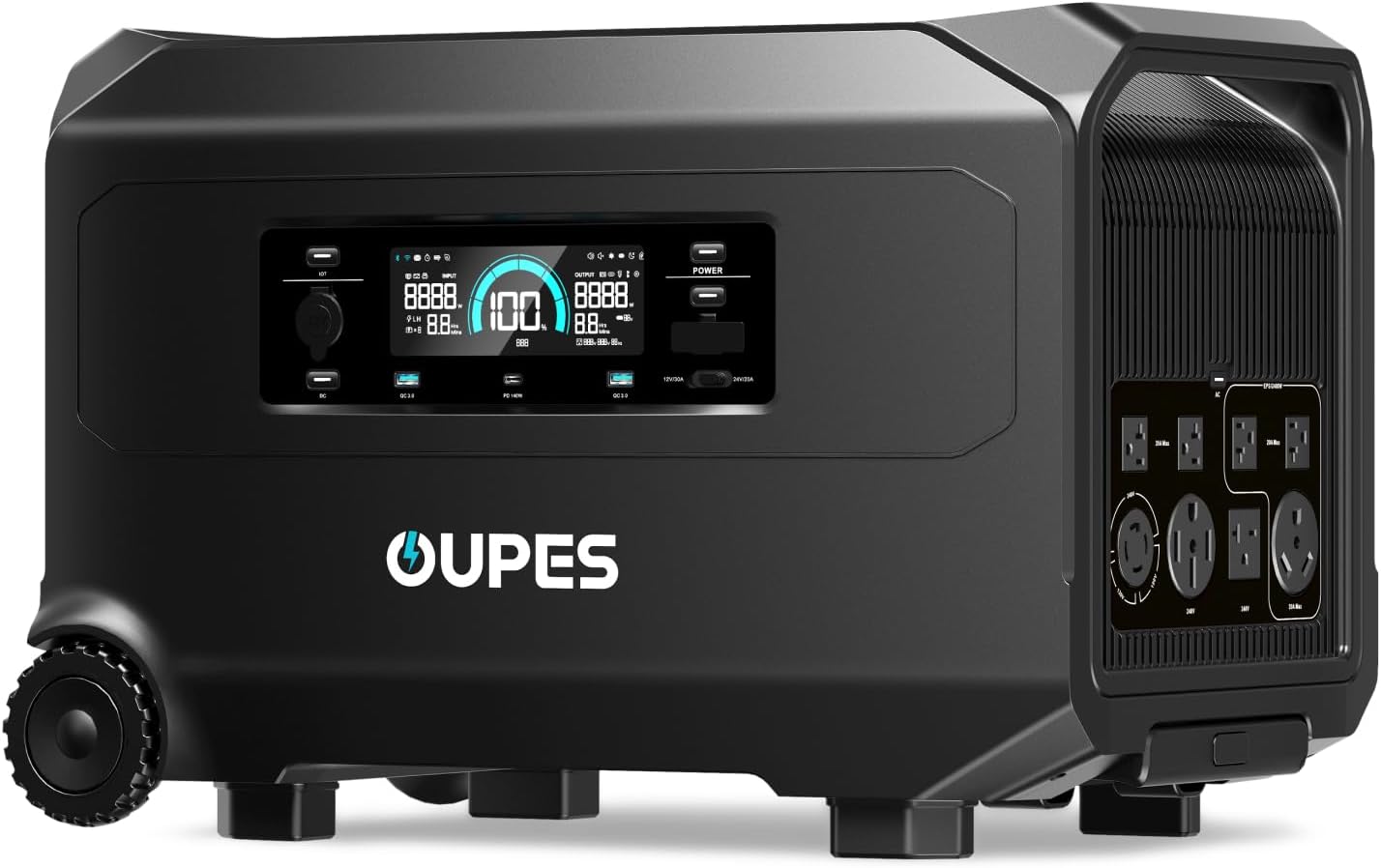
OUPES Guardian 6000 Portable Power Station
A high-output option aimed at more demanding home backup. It’s a strong fit when you want 240V support and the ability to scale into a longer-duration system.
- 4,608Wh capacity for longer essential runtimes
- 6,000W output with boost headroom for tougher loads
- 120V/240V dual voltage for more home-style compatibility
- Transfer-switch ready approach for cleaner emergency integration
#5 BLUETTI Apex 300 + B500K Expansion Battery Kit
This pick is for people who care most about stored energy right now, not later. When an outage stretches past the first night, capacity becomes comfort. It’s the difference between “power windows” and a home that still feels livable. This kit stands out because you’re starting with a bigger pool of energy upfront.
Why it ranked #5
- Big stored energy out of the gate: 7,884.8Wh in the kit gives you longer runway before you’re forced into strict rationing.
- Strong surge handling: Better confidence with appliances that have startup spikes.
- 120V/240V dual voltage: More flexibility if your backup plan includes heavier household loads.
- Solar-forward mindset: The recharge approach supports extended outage resilience when paired with panels.
What it’s best at during a 24–72 hour outage
If you’ve ever been on day two thinking, “We’re going to run out before this is over,” then you already understand the value of starting with more capacity. This setup is best when you want longer runtimes without immediately buying extra batteries.
- Longer refrigeration support with less babysitting
- More overnight comfort without watching the meter constantly
- Better buffer for unexpected needs and overlap loads
- A stronger base if you’re building a solar recharge routine
The trade-off to keep in mind
Bigger energy can sometimes make people lazy with loads. So the smart move is still the same. Protect the essentials, schedule heavy draws, and treat solar recharge like your daily reset button. Capacity buys you margin, but it doesn’t replace a plan.
My 3-day strategy with a higher-capacity kit
- Day 1: Use the margin. Keep the house stable without aggressive rationing.
- Day 2: Recharge early. Then run higher draws in windows so you don’t drift downward.
- Day 3: Preserve food and comfort first. Keep enough reserve for surprises.
If your priority is longer runtime from day one, this kit earns its place in the lineup.
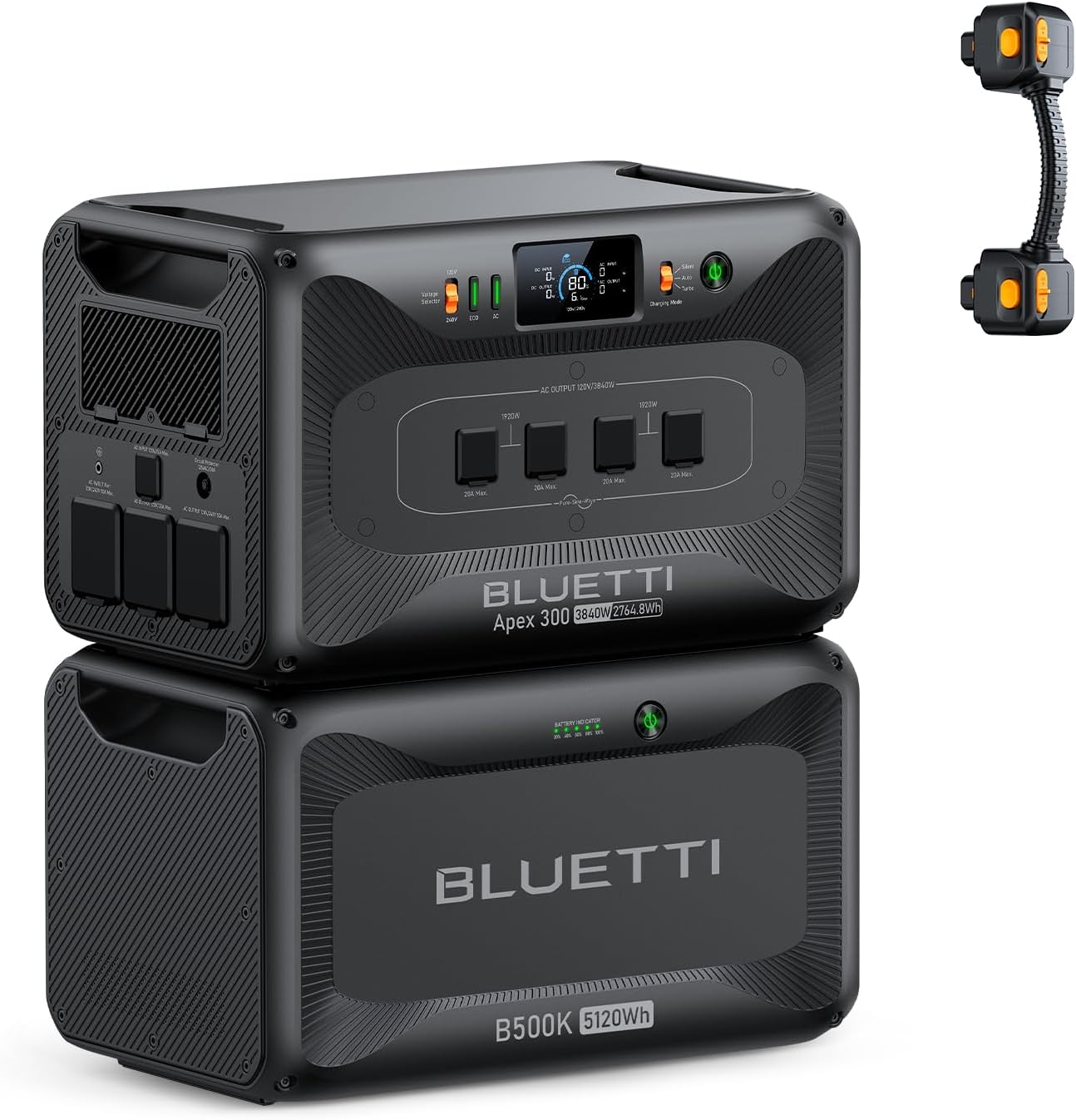
BLUETTI Apex 300 + B500K Expansion Battery Kit
This pick is about stored energy upfront. The kit-style capacity gives you longer runtimes right away, which matters when you want fewer “power windows” and more steady comfort.
- 7,884.8Wh kit capacity for longer multi-day planning
- Strong surge handling for appliance startup loads
- 120V/240V dual voltage support for broader home compatibility
- Solar-focused recharge options for extended outage resilience
Buying guide for 24–72 hour outages
Most people don’t pick the wrong solar generator because they’re careless. They pick the wrong one because outages feel emotional. You’re tired, you’re hot, the phone battery is dropping, and suddenly every spec sounds urgent. So I use a simple, calm method.
Step 1: Decide what “success” looks like for your home
Start with outcomes, not gear. For most families, success means food stays safe, everyone stays reachable, and the house stays tolerable. Then you can add comfort items without wrecking your runtime.
- Must-haves: refrigerator, freezer (optional), phones, lighting, fans, router
- Nice-to-haves: TV, coffee maker, microwave in short bursts, small dehumidifier
- Power hogs to treat carefully: space heaters, hot plates, air conditioners, electric ovens
Step 2: Learn the one number that predicts runtime
The battery capacity (Wh) is your fuel tank. Your watt usage is how fast you burn it. So the basic estimate is:
Quick math
Estimated hours ≈ Battery Wh ÷ Your average watts
Real life is messier. Fridges cycle on and off. Inverters have losses. So I treat this number as a starting point, not a promise.
If you don’t want to do the math in your head while you’re stressed, use my calculator here: Solar generator calculator and emergency power gear guide . It helps you estimate your load and match it to a realistic battery size.
Step 3: Don’t confuse output with endurance
Output (watts) tells you what the unit can run right now. Capacity (watt-hours) tells you how long it can run it. A high-output unit can still die fast if you run heavy loads nonstop. Meanwhile, a moderate-output unit can last surprisingly long if you run a disciplined plan.
- Output answers: “Can it start this appliance?”
- Capacity answers: “How many hours can we live like this?”
- Solar input answers: “Can we refill enough to survive tomorrow?”
Step 4: Build a “power window” plan for multi-day outages
This is the strategy that makes multi-day power possible without feeling miserable. You run high-draw items in short windows, then go back to essentials. It keeps the battery from free-falling.
- Morning window: recharge first, then do heavier tasks briefly
- Afternoon window: top off devices, run short comfort loads
- Evening window: stabilize overnight, protect food, keep air moving
Step 5: Treat solar as your “day-two insurance”
Solar input is what separates one-night backup from a real 72-hour plan. Even partial recharge changes everything. A cloudy day still helps. It just means you need tighter load control.
Solar planning tips
- Prioritize recharge early: top off the battery before you add comfort loads
- Don’t chase perfection: partial refills still extend you into the next night
- Angle matters: panels that face the sun well outperform “flat and forgotten” setups
- Plan for cords and placement: your best solar spot might not be near where the generator sits
Step 6: Match the pick to your household type
Here’s the simplest way I’d choose between the five, based on the way people actually live during outages.
- Pick #1 (EcoFlow DELTA Pro): best “core unit” when you want balance and future expansion.
- Pick #2 (Anker SOLIX F3800): best when 240V support and higher output are a priority.
- Pick #3 (Jackery HomePower 3600 Plus): best when you want capable power with less complexity and easier handling.
- Pick #4 (OUPES Guardian 6000): best for higher-load households that want serious output and a system mindset.
- Pick #5 (BLUETTI Apex 300 + B500K): best when you want bigger stored energy upfront for longer runtimes.
Safety notes I don’t skip
Portable power stations are safer indoors than gas generators. Still, safe habits matter, especially when you’re tired and distracted.
- Keep the unit dry and ventilated, and avoid running cords through standing water.
- Use heavy-duty extension cords rated for the load you’re running.
- Protect the battery from extreme heat whenever possible.
- If you connect to home wiring, use proper transfer equipment and follow local code.
For broader readiness guidance, I point people to official resources like FEMA and Ready.gov. They’re not exciting, but they are reliable.
Free checklist
If you want a quick, printable plan for the hours before a storm and the first days after, grab my storm checklist here: Hurricane Preparedness Storm Checklist.
It’s built to help you stage gear early, so you’re not scrambling once the lights go out.
Final verdict and what I’d do next
If you’re planning for full-day to multi-day outages, the best move is picking one “core” unit and then building habits around it. The habits matter more than people expect. That’s what keeps you from draining a big battery in one bad evening.
My quick pick guide if you’re still stuck
- Want the most balanced starting point: EcoFlow DELTA Pro.
- Need 240V flexibility and higher output: Anker SOLIX F3800.
- Want capable power with less complexity: Jackery HomePower 3600 Plus.
- Have higher load demands and want a system mindset: OUPES Guardian 6000.
- Want bigger stored energy right away: BLUETTI Apex 300 + B500K kit.
Helpful tool
If you want to match a unit to your real appliances, use my calculator and guide here: Solar generator calculator and emergency power gear guide .
I built it for the moment when you’re trying to figure out if your plan is realistic without guessing.
Free checklist
Want the “do this first” plan before the weather turns? Here’s the checklist I keep coming back to: Hurricane Preparedness Storm Checklist .
FTC note: Some links in this article are affiliate links. As an Amazon Associate I earn from qualifying purchases.
FAQ
How do I estimate how long a solar generator will run my refrigerator?
Start with battery capacity in watt-hours, then divide by your fridge’s average watts while it’s running. After that, reduce the result because fridges cycle, and power stations have inverter losses. If you want a faster estimate, use my solar generator calculator .
What’s more important for outages, watts or watt-hours?
Watt-hours usually decide whether you make it through the night. Watts decide whether you can start and run a specific appliance. For multi-day outages, you want enough watt-hours to matter and enough watts to handle real overlap loads.
Can I run a portable power station inside my house?
Yes, portable battery power stations are designed for indoor use. Still, keep the unit dry, give it ventilation, and avoid running cords through wet areas. This is safer indoors than a gas generator, which must stay outside due to exhaust.
Do I need solar panels, or can I just recharge from the wall?
For short outages, wall charging can be enough. For 24–72 hour outages, solar becomes your day-two insurance. Even partial daily recharge reduces stress and extends your plan.
What size solar input should I aim for?
Higher solar input generally shortens recovery time, which matters when you’re trying to refill between nights. However, the best number depends on your battery size and how much power you use daily. Pairing a big battery with weak solar often creates a slow drift downward.
Can these power a whole house?
Not like a permanent standby generator. Some units can support many circuits or specific 240V loads with the right setup, but runtime still depends on battery capacity and your load choices. I treat them as “essential power systems” unless you expand heavily and recharge reliably.
Are transfer switches required?
If you want to power home circuits safely through an inlet, then yes, you need proper transfer equipment. Plugging directly into appliances with extension cords does not require a transfer switch, but it does require safe cord sizing and load management.
Author note
I research storm preparedness and outage resilience with a focus on practical home systems. I build guides that translate specs into real decisions, especially for families planning for 24–72 hour power loss.