

Most Reliable Communication for Blackouts & Storms
- 2-Way Messaging & SOS: Text, email, check-in, GPS & 24/7 SOS—works off-grid, no cell needed
- Rugged. Trusted: IP68, 200+hr battery, global Iridium coverage. Works in hurricanes, floods, or power outages
When the lights go out, having the right emergency communication tools can be a true lifeline not just for updates, but for survival. Whether you’re tracking a hurricane, trying to reach loved ones, or waiting for safety alerts, reliable communication is essential when cell service and power fail.
This guide covers the most effective communication tools for emergencies, including weather radios, power-free transmitters, and battery-independent devices. We’ll help you choose gear that keeps your family informed and connected during storms, blackouts, or disaster situations..
Best Emergency Radios for Storm Communication
Emergency radios are some of the most vital communication tools for storms and blackouts. They don’t rely on cellular networks, making them ideal when traditional communication fails. Look for models with NOAA alerts, crank charging, and portability so you’re always ready when the weather turns.
Emergency radios are some of the most reliable communication tools for storms and blackouts. Unlike smartphones, they don’t rely on Wi-Fi or cell towers—making them essential when traditional networks go down. Look for models that include NOAA weather alerts, crank or solar charging, and battery independence to stay informed even during long-term outages.
Want to know how prepared your household really is? Take our free Blackout Readiness Quiz to uncover gaps in your emergency communication plan and get personalized gear recommendations.
As an Amazon Associate I earn from qualifying purchases.


Emergency Phone Chargers for Storms & Power Outages
Even the best emergency communication tools are useless if your phone battery dies. Keeping your devices charged during a power outage is critical for receiving alerts, sending messages, and using emergency apps. Whether you’re using a shortwave radio with Bluetooth, a satellite messenger, or just a smartphone, reliable power banks are your lifeline.
Below are our top picks for fast-charging emergency power banks each with high capacity, compact design, and storm-ready features. Choose one with solar backup, USB-C output, or pass-through charging to stay connected in any scenario.

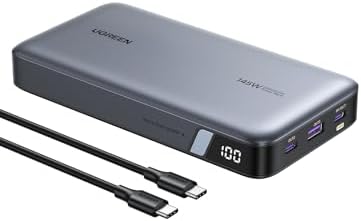
🔌 Don’t wait for 1% battery. Make charging part of your emergency plan.
Two-Way Radios for Emergency Communication
Two-way radios let nearby family members talk when cell service goes down. Pick a channel before a storm and test it along the routes you expect to use. Walls, hills, and trees can shorten range. A Family Radio Service (FRS) set suits local check-ins. GMRS is a separate service with different FCC licensing rules.
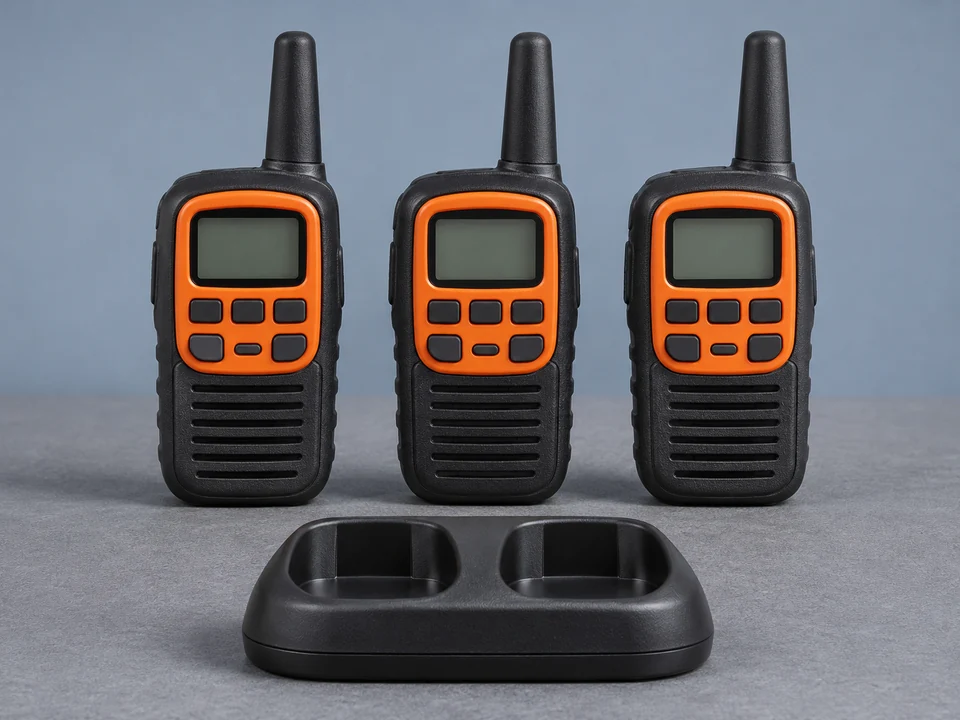
Midland X-Talker T51X3VP3 Three-Pack
Editorial illustration.
Choose this 22-channel FRS set when you need a radio for each of three people during a blackout. The black-and-orange set includes three rechargeable battery packs, belt clips, a desktop charger, and a micro-USB charging cable. Each radio can also use three AAA alkaline batteries, sold separately.
Carry spare AAA batteries if you may be away from the charger. Check range between your actual meeting points before relying on the radios during an outage. This offer uses micro-USB, so pack the included cable. See Midland’s operating manual and kit contents.
As an Amazon Associate I earn from qualifying purchases.
View the Midland three-pack on Amazon
Visual & Audible Emergency Communication Tools
When other systems fail, visual and audible emergency communication tools become your lifeline. LED flares, reflective gear, and whistles can help rescuers find you, direct traffic, or signal for help in the dark. These tools are essential for medical emergencies, roadside breakdowns, and low-visibility conditions when standard communication is no longer an option.

Low-Tech Communication Plans
Prepare for the worst-case scenario. If devices fail, a written family communication plan with contact info and meeting points is essential. Download our Family Emergency Meeting Plan (PDF).
Multi-Function Emergency Communication Tools
These multi-use emergency communication tools are ideal for go bags, blackout kits, or first-time preppers. Each device combines a weather radio, flashlight, phone charger, and SOS alarm into a single unit—giving you critical communication and visibility tools in one compact form. Look for hand-crank or solar-charged models to stay powered up without outlets.
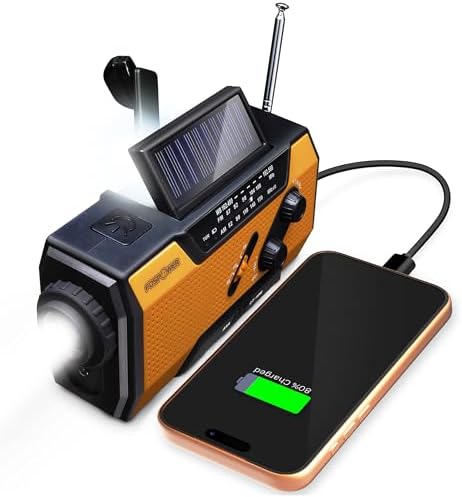
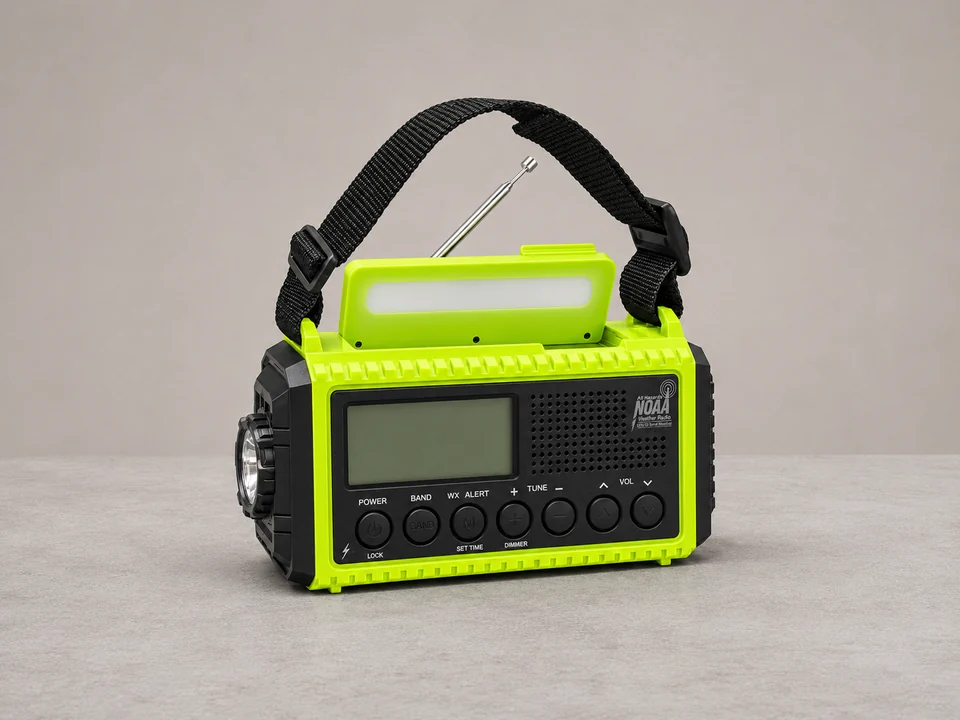
Raynic CR1009Pro Automatic NOAA Weather Radio
Editorial illustration.
Choose this green LCD model so a NOAA warning can sound while the radio is in standby. Enable WX Alert and check reception where you plan to keep it. It also plays AM, FM and shortwave broadcasts.
Charge the 5,000 mAh battery over micro-USB before a storm. The hand crank and solar panel provide backup charging, and three AAA batteries can run the radio when its internal battery is low. Save the radio battery for alerts and use a separate power bank for regular phone charging. See the Raynic CR1009Pro owner’s manual.
As an Amazon Associate I earn from qualifying purchases.
View the green Raynic CR1009Pro on AmazonFinal Recap
The best emergency communication tools don’t just keep you informed: they keep your family calm and connected in the middle of chaos. Choose the right tools for your space and budget now—before the next outage.
✅ Ready to build your full storm plan? Get the Free Storm-Ready Checklist
FAQs
What is the most important emergency communication tool to have?
For storm warnings during a blackout, choose a battery-powered NOAA Weather Radio with automatic standby alerts. Enable the alert mode and confirm reception in the room where you will use it.
Can phones work during a power outage?
Yes, but only if they remain charged and local cell towers are operational. Backup chargers and solar power banks are vital tools.
What’s the best way to communicate if cell service is down?
Use two-way radios or stick to your family’s written communication plan. Simple walkie-talkies or physical instructions can bridge the gap.
Trusted Government Resources for Emergency Communication
- 📢 Ready.gov – Emergency Alerts & Warnings
Learn how government agencies deliver public safety messages during crises through WEA, NOAA, and other broadcast systems. - 📋 FEMA – Emergency Supply Checklist
FEMA’s official checklist includes communication tools like hand-crank radios, whistles, and phone chargers. - 📻 NOAA – Weather Radio Network
NOAA Weather Radio is the most direct source for official storm warnings, especially during power outages. - ♿ CDC – Emergency Communication for Disabilities
Guidelines for communicating with and assisting individuals with disabilities or functional needs during emergencies. - 📱 FCC – Wireless Emergency Alerts (WEA)
Understand how WEA messages are broadcast to cell phones without requiring Wi-Fi or mobile data.