Florida storms aren’t “if” they’re “when.” With power outages lasting days and evacuation routes packed within hours, families across the state are preparing smarter. This guide gives you the real-world gear, free checklists, and expert tips built for Florida homes.

Florida-Specific Emergency Kit
- 5+ days of drinking water per person
- Solar or battery-powered NOAA weather radio
- Portable power station or solar generator
- Evacuation zone map (printed + waterproof)
- Bug spray, sunscreen, and electrolytes
- Waterproof folder for IDs, insurance, and deeds
- Dry bag for cables, chargers, and documents
Download the full checklist here →
Best Backup Power for Your Florida Hurricane Emergency Kit
Choose by what you need to power. A compact kit can recharge phones, radios and lights. A larger battery makes sense if you need to cover a measured appliance load and its startup surge. This comparison uses published specifications.
As an Amazon Associate I earn from qualifying purchases.
Compact kit for phones, radios and lights: BLUETTI Elite 30 V2 with a 100 W panel
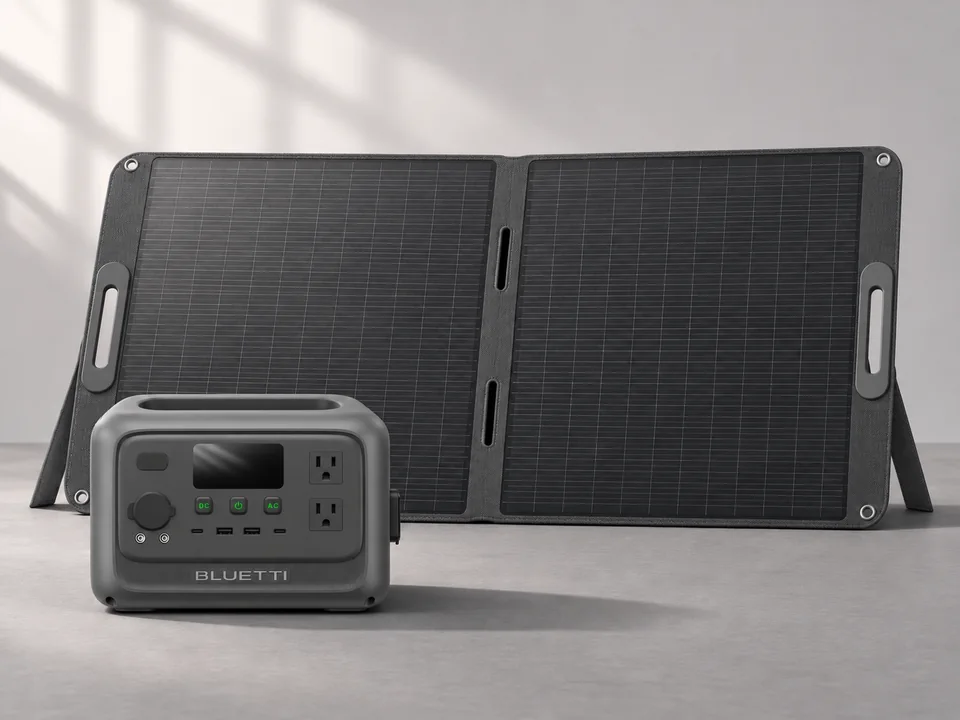
The Deep Gray Elite 30 V2 has a 288 Wh lithium iron phosphate battery and 600 W of rated AC output. The kit includes one 100 W folding solar panel, a solar charging cable, and AC and car charging cables. Use it for USB charging or lights and a small router with a measured load.
Choose this bundle if you want one compact station for phones, radios, and lights with a way to recharge in sunlight. If you can recharge between short outages, the station alone may meet your needs. The included 100 W panel adds a charging option. The station still has a fixed 288 Wh battery.
View BLUETTI Elite 30 V2 with 100 W panel on Amazon
See the BLUETTI kit contents and specifications.
About 1 kWh for a measured appliance load: Jackery Explorer 1000 v2 with a 200 W panel

The selected E1000v2+200W kit comes with one Explorer 1000 v2 and one 200 W panel. It supplies up to 1,500 W of rated AC output and stores about 1 kWh. Jackery’s JE-1000D specifications give 1,070 Wh, while the Amazon listing also shows a lower figure. Confirm the rating on the label of the unit you receive before using a capacity-based runtime estimate.
Consider it for a compatible refrigerator, fan or work setup after measuring consumption and checking startup power. Jackery lists roughly 7.5 hours to recharge with one SolarSaga 200 panel under its test conditions, so plan for slower recharging in clouds or shade.
View Jackery Explorer 1000 v2 with 200 W panel on Amazon
See Jackery’s JE-1000D specifications.
EcoFlow DELTA Pro with one 400 W panel: configuration reference

The original DELTA Pro is rated at 3,600 Wh and 3,600 W AC output. The 400 W panel was part of a specific bundle. If you already own that setup, look up the solar input limits and how to connect the panel in the manufacturer documentation. The panel rating is a maximum, and one panel takes much longer to refill this battery than a multi-panel array.
Read EcoFlow’s original 400 W bundle specifications.
| Configuration | Rated battery / AC output | Panel in listed kit | Fit |
|---|---|---|---|
| BLUETTI Elite 30 V2 | 288 Wh / 600 W | 1 × 100 W | Phones, radios and lights. The included panel can recharge the station in sunlight. |
| Jackery Explorer 1000 v2 | About 1 kWh / 1,500 W | 1 × 200 W | Longer light loads or a measured appliance |
| Original EcoFlow DELTA Pro | 3,600 Wh / 3,600 W | 1 × 400 W | Configuration reference for existing owners |
For a rough comparison, assume 80% of rated capacity reaches a steady load. At 20 W, 288 Wh gives about 11.5 hours. Using 1,000 Wh as a rounded estimate, the Jackery gives about 8 hours at 100 W. Startup requirements, inverter and standby losses, load cycling, battery condition and charge reserve affect these estimates. Measure your own devices before relying on either kit.

🌀 Florida Hurricane Preparedness Plan: Your Step-by-Step Storm Season Blueprint
Built from real storms, real power outages, and real recovery. This complete Florida-focused guide covers gear, evacuation, power backup, and kid/pet safety — all tailored for our unique risks. If you live in the Sunshine State, this is the playbook.
🔗 Read the Full Florida Hurricane PlanEvacuation Tips & Zone Maps
- Keep gas tank at least half full during storm season
- Use FL511 and GasBuddy to track fuel and road closures
- Pre-pack a go-bag: water, meds, pet food, copies of ID
- Know the closest pet-friendly shelters in your county
- Find your evacuation zone via your county emergency site
Local Weather Tools & Shelters
More Florida Resources
- Full Florida Hurricane Checklist (PDF)
- Compare Portable Power Stations & Needs Calculator
- Take the Blackout Readiness Quiz
Florida Hurricane Emergency Kit FAQs
Can I power my fridge during a hurricane?
A compatible battery can run a refrigerator if it can handle the startup surge and has enough usable energy. Measure refrigerator energy use with a plug-in meter over a representative period and allow for temperature, cycling and inverter losses.
Will solar panels still work during cloudy weather or at night?
A charged battery can supply power at night. The panel needs daylight to recharge it, and cloud cover and shade can substantially reduce output.
Can I run a CPAP or medical device?
Use the device maker’s instructions to confirm approved backup power and expected runtime for your exact medical device and settings. Make an outage plan with your healthcare provider or equipment supplier. See the FDA power-outage planning guide.
Does pass-through charging work?
Check the manual for your exact station and input type. Output, charging and transfer limits vary by model and operating mode.
Are solar panels hurricane-proof?
Bring portable folding panels indoors before winds pick up. Recharge your battery before the storm and set the panel back out only when conditions are safe.
Can it power security systems or sump pumps?
Check the equipment’s running and startup wattage and how it connects. Have a qualified electrician evaluate any hardwired loads and transfer equipment.
How do I know which size generator I need?
List the devices you need and measure their energy use over the time you want to cover. Look for usable capacity above that total and rated output that can handle running and startup loads. Plan medical-device backup separately with your provider.
When is peak hurricane season in Florida?
Mid-August through October. September is historically the most active month.
How should I prepare my Florida home for a hurricane?
Seal roof, secure garage door, install shutters, clear debris, charge backup power and fill water jugs.
Do I need flood insurance in Florida?
Yes even outside flood zones. Poor drainage and storm surge can still flood homes. Strongly recommended.
See the Emergency Gear Hub for gear guides on lighting, communications, and backup power.