By Brian Reinke, Storm Ready Home | Updated November 10, 2026
A home emergency kit should cover water, food, light, communication, first aid, sanitation and the supplies your household uses every day. Store bulky supplies at home. Pack a separate bag with what you can carry if you need to leave. If you buy a ready-made kit, compare the quantities inside with the number of people and days you need to cover.
Home emergency kit checklist
- Water: Start with one gallon per person per day for drinking, food prep and basic hygiene. Four people need 12 gallons for three days. Account for pets, heat and individual needs.
- Food: Store shelf-stable meals people will eat without power, plus a manual can opener. Use the emergency food supply guide to build a menu and shopping list.
- Light and communications: Pack flashlights or headlamps, compatible spare batteries, a phone power bank and charging cables, and a battery-powered or hand-crank radio.
- First aid and hygiene: Keep a first aid kit, soap or hand sanitizer, wipes, garbage bags and the personal hygiene products your household needs.
- Practical extras: Add a whistle, sturdy shoes, a paper contact list, copies of important documents in a waterproof bag, and some cash.
The American Red Cross supplies list uses a three-day food and water baseline for evacuation and two weeks for home. Start with what you can store and work toward that home target. The CDC emergency water guide explains how to store water and when you may need more.
What to put in a separate go bag
Pack a flashlight, charging cable and power bank, ready-to-eat food, drinking water you can carry, first aid, a change of clothes, rain protection, medications and contact information. Pick it up when it’s packed. If it’s too heavy, divide supplies among people who can carry them and plan where you can get more safe water. Keep shoes, keys and the bag easy to reach.
Compare two ready-made emergency kits
These examples use the sellers’ published inventories. We did not test the kits. The bars compare sealed drinking water included with the Red Cross three-day planning amount for the listed number of people. Empty containers are excluded.
Ready America 2-Person 3-Day Backpack, SKU 70280
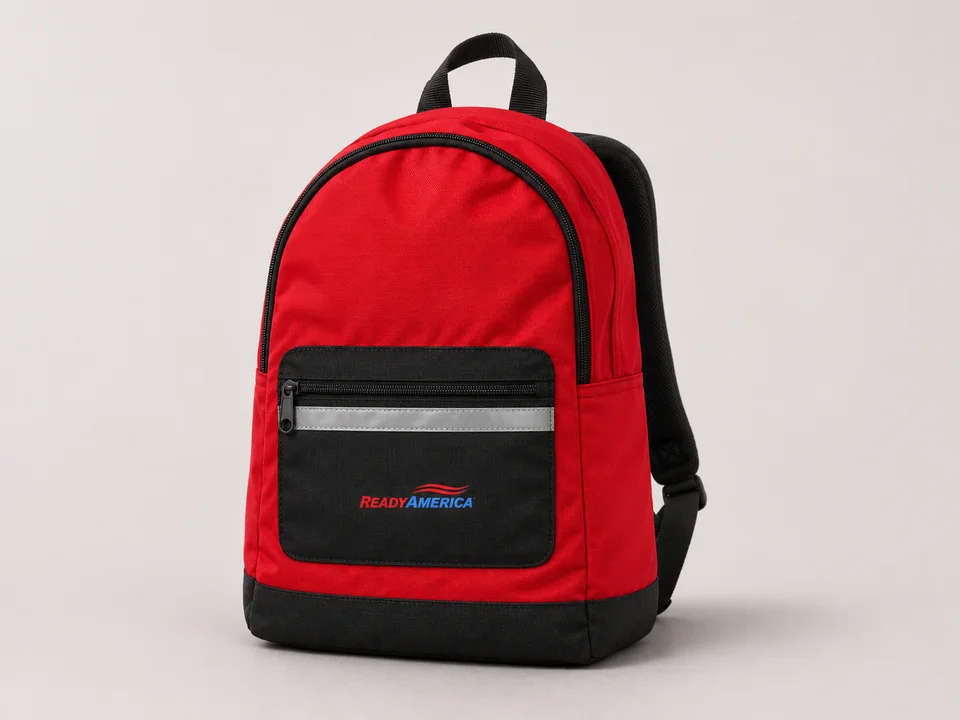
The listing includes food bars, lightsticks, a first aid kit, blankets and ponchos. Add more water and a flashlight with spare batteries.
Water in the bag: 50.7 fl oz (12 × 4.225 fl oz). Three-day planning baseline: 6 gallons for two people.
About 7% of the three-day water baseline.
As an Amazon Associate I earn from qualifying purchases.
American Red Cross Deluxe 3-Day Kit, item 91052
The listing includes a flashlight, first aid and hygiene supplies, and an empty 3.5-gallon container. Plan where to fill it with safe water.
Water in the bag: 16 fl oz (4 × 4 fl oz). Three-day planning baseline: 3 gallons for one person.
About 4% of the three-day water baseline.
As an Amazon Associate I earn from qualifying purchases.
Add the supplies only your household can choose
Add prescriptions, glasses, hearing-aid batteries, infant supplies, pet food and a leash or carrier as applicable. Ask your pharmacist how to plan for prescription refills and temperature-sensitive medicines. If anyone uses powered medical equipment, work out a backup power and relocation plan with their care team or equipment supplier ahead of time.
Where to store the kit and when to check it
Keep the home supply in a cool, dry, accessible place. Store the go bag near your usual exit, out of the way of doors and walkways. Before storm season and after using the kit, check water and food dates, replace what you used, recharge power banks, and confirm that clothing and household supplies still fit.
Make a list of what you already own before buying anything. Start by filling gaps in water, food and lighting. Then use the power outage guide to plan what you’ll do when the electricity goes out.