Why Emergency Preparedness Gear Matters
- Florida and Gulf Coast power outages are common and can last days or weeks
- Choose supplies for your planned outage duration and the devices you need
- Keep copies of important household and insurance documents with your plan
- Every kit should be updated yearly before hurricane season
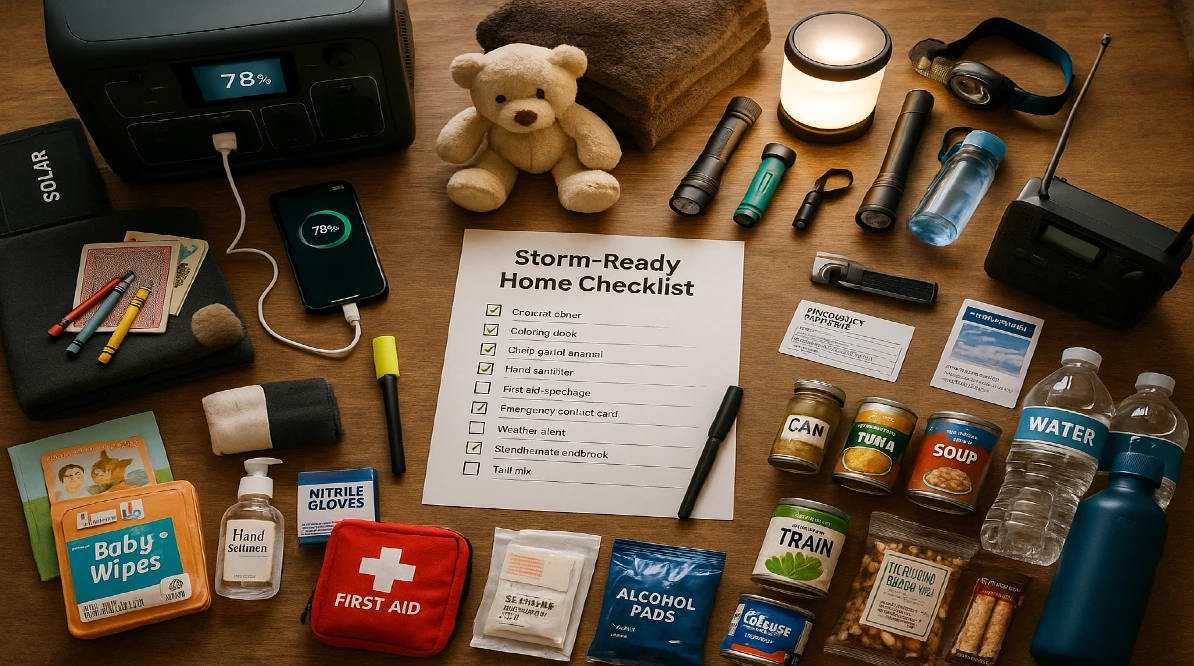
If you’re starting with the basics, use the home blackout kit checklist to set up lights, phone charging, and outage updates for the first hour. Then use the sections below to compare equipment for the rest of your plan.
Backup Power: Your Blackout Lifeline
- List the devices you need to run and check each device’s power requirements. Make a separate outage plan with your care team for equipment you depend on.
- Look for units with surge protection, fast recharge, weather resistance, and a U.S. warranty
- Check specs: Watt-hours (Wh), output watts, plug types, and independent reviews
The most important emergency preparedness gear for blackouts is dependable backup power. Compare stored energy, output limits, recharge options, and the requirements of your actual devices. Product listings are not independent testing reports.
Emergency Lighting: Stay Safe When the Lights Go Out
- Rechargeable flashlights, lanterns, and headlamps rated for long runtime and water resistance
- Choose models with high lumens and rugged build for indoor and outdoor use
- Keep a light where you would need it first, such as near your bed or at the top of the stairs.
Good lighting is essential in every blackout. Compare brightness, runtime, battery type, charging options, and the manufacturer’s stated use conditions.
Emergency Communication: Stay Informed in Every Storm
- Battery-powered or hand-crank NOAA radios for weather alerts and evacuation orders
- Portable power banks to keep phones charged for check-ins and insurance claims
- Choose radios with multiple power options (solar, USB, batteries) and real-use reviews
Communication tools are a non-negotiable part of emergency preparedness gear for blackouts and storm safety. A weather radio receives broadcasts; it does not provide two-way communication. Plan how your household will receive alerts and contact one another.
Off-Grid Cooking: Eat Well During Blackouts
- No-cook food and compatible electric cooking equipment with suitable backup power
- Keep outdoor fuel-burning cooking equipment outdoors and follow its operating instructions
- Never use a portable gas camp stove or grill inside a home, garage, tent, or camper
Cooking is a challenge in any long outage. Our guide covers no-cook meals, electric cooking with suitable backup power, and outdoor-only fuel-burning equipment. Never use a portable gas camp stove or grill indoors. See CDC carbon monoxide guidance.
Sanitation & Hygiene: Health Essentials for Every Kit
- Water filters, portable toilets, and disinfectants to protect your family’s health
- Check product labels, instructions, intended uses, and storage requirements
- Restock yearly and check expiration dates before hurricane season
Include hygiene and waste-disposal supplies in your household plan. Review the contents, use instructions, and expiration dates for each item.
Ready-Made Emergency Kits: Compare Contents Before Buying
- Compare the complete contents list, quantities, expiration dates, and warranty terms
- Best for new homeowners, renters, and families needing fast solutions
- Check which power, lighting, water, first-aid, and hygiene supplies are actually included
Want a grab-and-go option? Compare a pre-made kit with your household checklist and add anything missing.